
Search

Join us for stories, imagination and connection in the Discovery Centre

Get ready for a week of mind-blowing fun as the Discovery Centre comes alive for National Science Week with this year’s exciting theme: Decoding the Universe!

A powerful screening of truth telling that captures the stories of the Western Australia Stolen Generation.
At the Wesfarmers Centre, we undertake research in five key areas of infections and immunisation to assist in children's health.
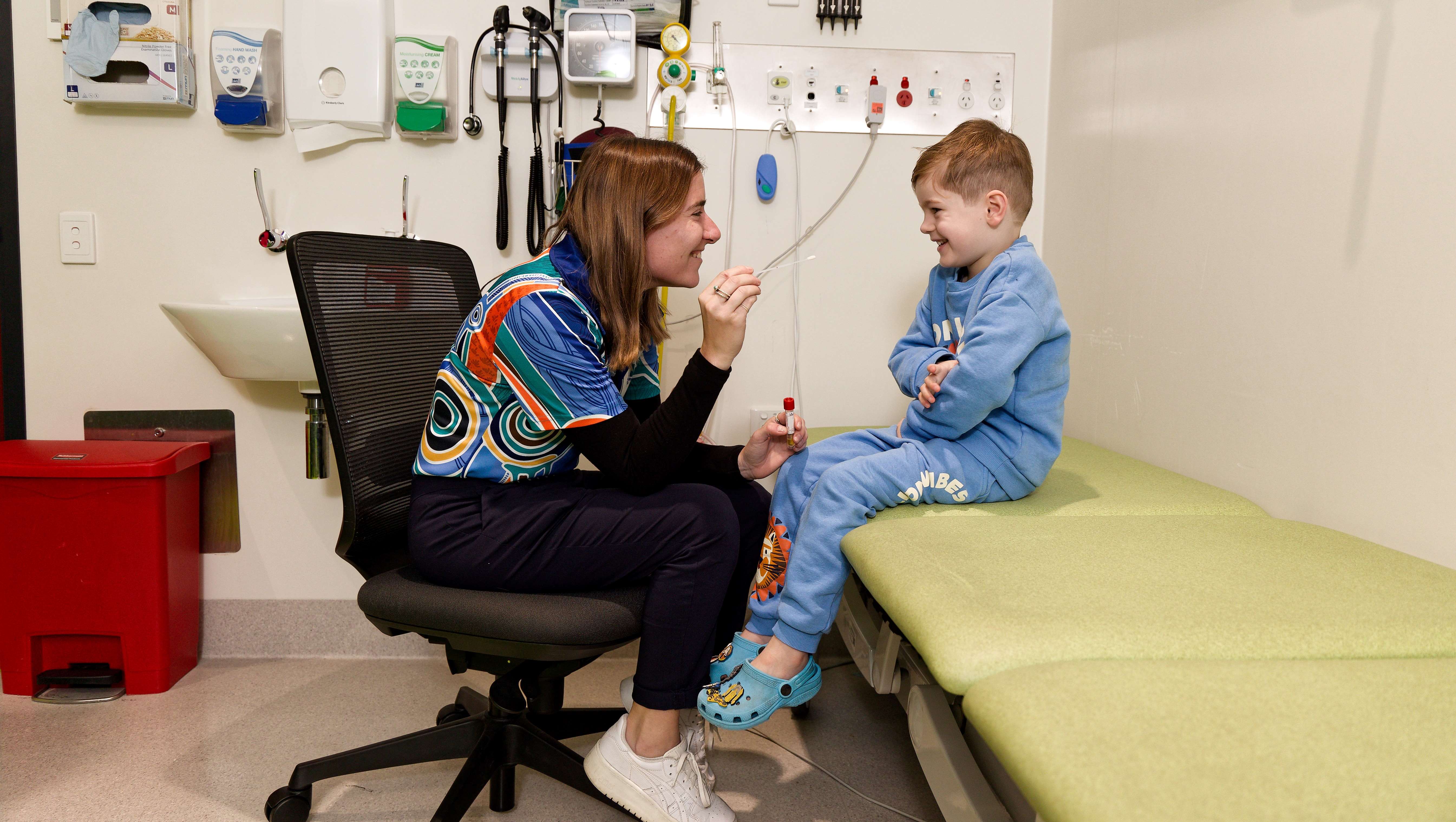
Researchers from The Kids Research Institute Australia would like to understand more about respiratory syncytial virus (RSV) and how we can provide the best protection for kids.
Review the hospital-based research that the Wesfamers Centre of Vaccines & Infectious Diseases conducts.
Fear of severe adverse reaction (SAR) and reluctance of health care providers to administer intramuscular injections are major contributing factors to poor adherence of benzathine penicillin G (BPG) in the management of rheumatic heart disease (RHD). However, data on the risk of SARs following BPG injections for RHD are relatively limited and inconclusive. Our systematic review and meta-analysis aimed to evaluate the incidence of SARs associated with BPG injections used for secondary prophylaxis of RHD.
To identify factors influencing the completion of a three-dose course of weekly intramuscular benzathine penicillin G injections by adults and adolescents with syphilis of unknown duration or late syphilis.
Chronic suppurative otitis media (CSOM), sometimes referred to as chronic otitis media, is a chronic inflammation and often polymicrobial infection (involving more than one micro-organism) of the middle ear and mastoid cavity, characterised by ear discharge (otorrhoea) through a perforated tympanic membrane.
This article documents the establishment of community laundries in rural/remote Aboriginal and Torres Strait Islander communities between 2000-2024, with the aim to support synergistic planning, implementation and evaluation.