
Search
This chapter discusses the importance of investment in early life determinants of health to break the cycle of long-term disadvantage. This chapter addresses these issues while focussing on neurodevelopmental disorders and their related mental health concerns as the targets at the centre of a biopsychosocial transformation of the health system.

Walkern Katatdjin researcher and lead author Mx Shakara Liddelow-Hunt leads a conversation with the community on the key actions to include in the Roadmap.
On the 9th of November from 5:30 to 7:30pm, Embrace @ The Kids Research Institute Australia, in partnership with Rio Tinto, invites you to a free public panel discussion on permacrisis and the mental health of young people.

The Kids Research Institute Australia congratulates Professor Helen Milroy on being named Western Australia’s 2021 Australian of the Year.
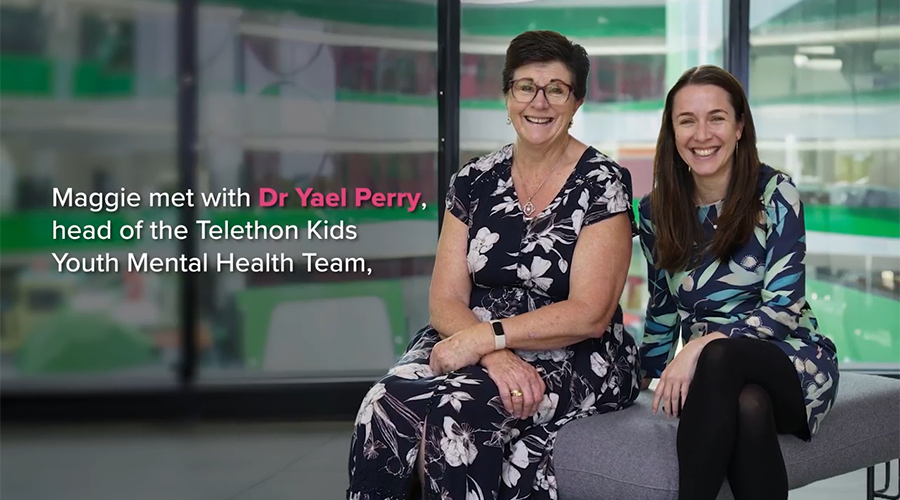
We were delighted to have Australia’s best-known parenting author, Maggie Dent, back at The Kids Research Institute Australia this week, to talk about the mental health of our teenagers.
Cognitive and motor dysfunction are hallmark features of the psychosis continuum, and have been detected during late childhood and adolescence in youth who report psychotic experiences (PE). However, previous investigations have not explored infancy and early childhood development.
Young Australians experiencing homelessness are at elevated risk of suicidal thoughts and behaviors. LivingWorks’ safeTALK training teaches people the necessary skills for responding to someone thinking of suicide, including how to connect them with further support.
Climate change is both an environmental crisis and a growing source of psychological distress for young people, calling for responses that nurture emotional resilience and collective engagement. The emerging response to climate distress has mainly focused on formal psychological and individual-level interventions.
Stigma and self-stigma reduce self-esteem and increase hopelessness and suicidality. While psychotic disorders are widely recognized as the most stigmatizing of all mental health disorders, there is a dearth of research investigating how stigma and self-stigma are experienced by young people at ultra-high risk (UHR) for psychosis.
To improve early intervention and personalise treatment for individuals early on the psychosis continuum, a greater understanding of symptom dynamics is required. We address this by identifying and evaluating the movement between empirically derived attenuated psychotic symptomatic substates-clusters of symptoms that occur within individuals over time.