
Search
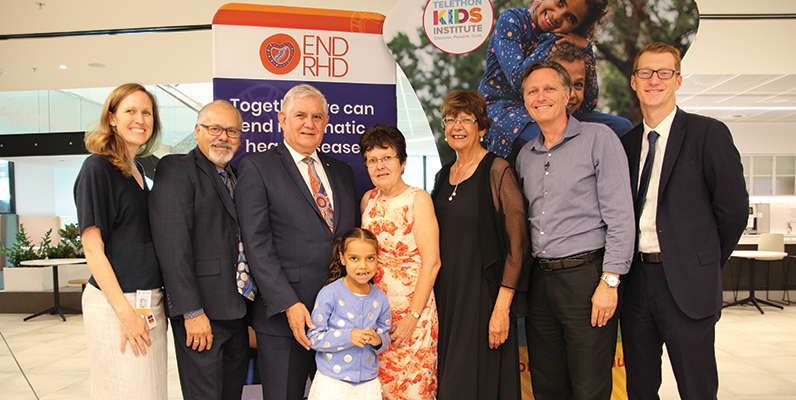
It's been a huge year for those working to eliminate rheumatic heart disease (RHD), with breakthroughs including $35M in funding to develop a Strep A vaccine.

When Katrina took her daughter Tenaya to the local emergency department for the fourth time, she was determined she wouldn’t be leaving without answers.
The World Health Organisation resolution for global action to tackle rheumatic heart disease (RHD) will have significant implications for Australia, which has some of the highest rates of the disease in the world.

Leading paediatrician, infectious diseases specialist and Executive Director of The Kids Research Institute Australia, Professor Jonathan Carapetis, has been recognised for his significant contribution towards medical research with the award of Member of the Order of Australia (AM).

In a WA first, researchers from The Kids Research Institute Australia have shown that Aboriginal babies are 22.5 times more likely to be treated for skin infections than non-Aboriginal babies.

Researchers from the Wesfarmers Centre of Vaccines and Infectious Diseases at The Kids Research Institute Australia have shared their expertise with the community in Cockburn, covering topics ranging from respiratory disease in babies to recurring ear infections in kids.

Children at risk of potentially life-threatening Strep A infections no longer have to wait five days for timely treatment, thanks to a The Kids Research Institute Australia study conducted in the remote Kimberley region of Western Australia.
Rheumatic heart disease is a major cause of premature cardiovascular morbidity and mortality globally. Over the past decade, echocardiographic screening has changed our understanding of the natural history of RHD, revealing a high burden of clinically silent, mild RHD among people who cannot recall a history of preceding acute rheumatic fever. This viewpoint outlines the evidence that this earliest form of rheumatic heart disease, only detectable through echocardiographic screening, is an intermediate stage that many, but not all, individuals may pass through on the pathway to advanced rheumatic heart disease.
The in-vivo plasma concentration of penicillin needed to prevent Streptococcus pyogenes pharyngitis, recurrent acute rheumatic fever, and progressive rheumatic heart disease is not known. We used a human challenge model to assess the minimum penicillin concentration required to prevent streptococcal pharyngitis.
Acute rheumatic fever is an autoimmune disorder resulting from Group A Streptococcus pharyngitis or impetigo in children and adolescents, which may evolve to rheumatic heart disease (RHD) with persistent cardiac valve damage. RHD causes substantial mortality and morbidity globally, predominantly among socioeconomically disadvantaged populations, with an interplay of social determinants of health and genetic factors determining overall risk.