
Search
Our goal was to identify genetic risk factors for severe otitis media (OM) in Aboriginal Australians.
The interleukin (IL)-6 family of cytokines and exaggerated signal transducer and activator of transcription (STAT)3 signaling is implicated in idiopathic pulmonary fibrosis (IPF) pathogenesis, but the mechanisms regulating STAT3 expression and function are unknown. Suppressor of cytokine signaling (SOCS)1 and SOCS3 block STAT3, and low SOCS1 levels have been reported in IPF fibroblasts and shown to facilitate collagen production. Fibroblasts and lung tissue from IPF patients and controls were used to examine the mechanisms underlying SOCS1 down-regulation in IPF.
Visceral leishmaniasis (VL; Leishmania donovani) cases produce interferon-γ and tumor necrosis factor in response to soluble leishmanial antigen in whole-blood assays. Using transcriptional profiling, we demonstrate the impact of interleukin-10, a cytokine implicated in VL, on this response.

A ground-breaking global clinical trial to improve the lifelong lung health of children born extremely prematurely has been awarded a Medical Research Future Fund (MRFF) International Clinical Trials Collaborations Grant totalling almost $3 million.
The recent increase in babies born with brain and eye malformations in Brazil is associated with Zika virus (ZIKV) infection in utero. ZIKV alters host DNA methylation in vitro. Using genome-wide DNA methylation profiling we compared 18 babies born with congenital ZIKV microcephaly with 20 controls. We found ZIKV-associated alteration of host methylation patterns, notably at RABGAP1L which is important in brain development, at viral host immunity genes MX1 and ISG15, and in an epigenetic module containing the causal microcephaly gene MCPH1. Our data support the hypothesis that clinical signs of congenital ZIKV are associated with changes in DNA methylation.
Exome sequencing has enabled molecular diagnoses for rare disease patients but often with initial diagnostic rates of ~25-30%. Here we develop a robust computational pipeline to rank variants for reassessment of unsolved rare disease patients. A comprehensive web-based patient report is generated in which all deleterious variants can be filtered by gene, variant characteristics, OMIM disease and Phenolyzer scores, and all are annotated with an ACMG classification and links to ClinVar.
Exome sequencing is widely used in the diagnosis of rare genetic diseases and provides useful variant data for analysis of complex diseases. There is not always adequate population-specific reference data to assist in assigning a diagnostic variant to a specific clinical condition.

Valuable support from the Stan Perron Charitable Foundation will enable The Kids Research Institute Australia researchers to commence projects on topics ranging from disability, mental health and lung disease to diabetes, Aboriginal leadership, and the development of child-focused pandemic policies.
Human microbiota plays a fundamental role in modulating the immune response. Western environment and lifestyle are envisaged to alter the human microbiota with a new microbiome profile established in Chinese immigrants, which fails to prime the immune system. Here, we investigated how differences in composition of oropharyngeal microbiome may contribute to patterns of interaction between the microbiome and immune system in Chinese immigrants living in Australia.
Belaynew Christopher Peter Hannah Minda Huong Taye Blyth Richmond Moore Sarna Le MD, MPH, PhD MBBS (Hons) DCH FRACP FRCPA PhD MBBS MRCP(UK) FRACP OAM
We recently identified C. pseudodiphtheriticum and D. pigrum as the major nasopharyngeal species associated with resistance to recurrent ear infections
Here we focus on the problem of prioritising variants with respect to the observed disease phenotype
We evaluate a meta-taxonomic approach to determine the composition of prokaryotic and eukaryotic gut microflora using sequencing of 16S RNA and 18S rRNA

Four The Kids Research Institute Australia researchers have received prestigious fellowships and four significant cohort studies led or co-led by The Kids have received key grants under two new funding programs supported by the State Government’s Future Health Research and Innovation (FHRI) Fund.
Parents of children born prematurely have expressed concerns about their child’s lung health when they exercise, with symptoms such as breathlessness.
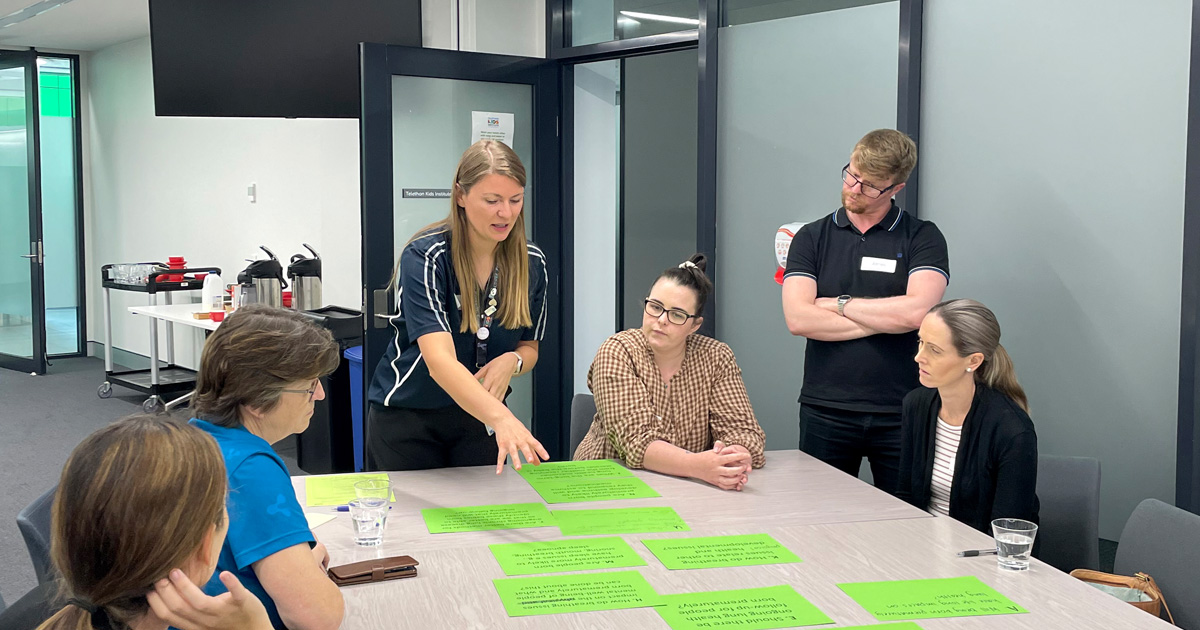
Respiratory disease remains one of the most significant complications of preterm birth, with lasting consequences.
The long-term consequences of early adverse exposures are well known but is becoming clear that early means not just in pregnancy but also in at least the two preceding generations. Furthermore, there are new existential threats to long term respiratory health, some of which have been presented at the INSPiRED meeting in Bologna and are reviewed in this manuscript.
Understand how bronchopulmonary dysplasia (BPD) and antenatal and postnatal factors influence diaphragmatic functional effectiveness in very preterm infants.
Nasal epithelial cells from young adults with a history of very preterm birth show delayed closure following scratch-wounding. Repair correlated with lung function, suggesting epithelial barrier integrity may play a role in preterm-associated lung disease.
Survivors of preterm birth (<37 weeks' gestation) have low peak oxygen uptake, a global measure of aerobic fitness and an established predictor of increased morbidity and mortality. However, little is known about other cardiopulmonary outcome measures in this population. We addressed the hypothesis that preterm birth is associated with abnormal respiratory, cardiovascular and metabolic responses to exercise, as assessed by cardiopulmonary exercise testing, via a systematic review and meta-analysis.