
Search
Involvement in healthcare decisions is associated with better health outcomes for patients. For children and adolescents with intellectual disability, parents and healthcare professionals need to balance listening to a child's wishes with the responsibility of keeping them safe.
Siblings of individuals with neurodevelopmental conditions (NDCs) experience distinct challenges and have unique strengths compared to siblings of individuals without NDCs.
There is limited but consistent evidence that suggests prenatal factors, including maternal stress, may contribute to susceptibility for otitis media. We aimed to determine the effect of multiple life stress events during pregnancy on risk of acute and recurrent otitis media in offspring at three and five years of age.
This study aimed to validate qPCR assays for specific microbiota, for use on dental plaque samples stored on Whatman FTA cards to compare relative oral health risk in Rett syndrome.
Despite the volume of accumulating knowledge from prospective Aboriginal cohort studies, longitudinal data describing developmental trajectories in health and well-being is limited.
Alcohol related harms disproportionately affect Aboriginal people in Australia. Motives to drink have been identified as the most proximal factor to alcohol consumption.The aim of this study is to assess the validity of a culturally modified Drinking Motives Questionnaire-Revised (DMQ-R) (Cooper, 1994) with Aboriginal participants. The study was cross sectional, utilising data collected via face-to-face surveys with a sample of adult Aboriginal participants.
To describe the effect of chronic pain on the activities of children and adolescents with cerebral palsy, to describe coping strategies, and to examine associations between effect of pain on activities, coping strategies, and level of pain.
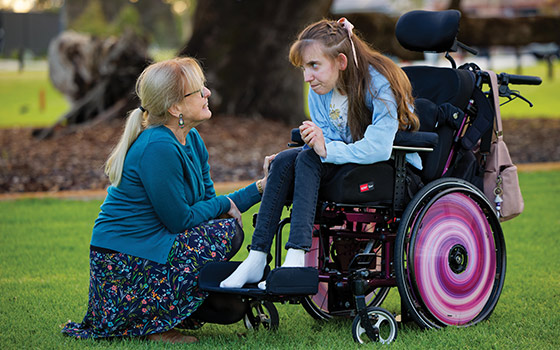
The Quality of Life Inventory - Disability

AuStralian Collaboration to Enhance Neuro-Development

The Sibling Project focuses on the wellbeing, relationships and needs of children, adolescents and emerging adults who have a sibling with a developmental disability.