
Search
Peter Britta Richmond Regli-von Ungern-Sternberg AM FAHMS MBBS MRCP(UK) FRACP MD, PhD, DEAA, FANZA Head, Vaccine Trials Group Chair of Paediatric
Because of its beneficial off-target effects against non-mycobacterial infectious diseases, bacillus Calmette-Guérin vaccination might be an accessible early intervention to boost protection against novel pathogens. Multiple epidemiological studies and randomised controlled trials are investigating the protective effect of BCG against coronavirus disease 2019 (COVID-19).
Leclercia adecarboxylata is a rare cause of septic arthritis in children, and has intrinsic resistance to common antibiotics. We describe two cases of L. adecarboxylata septic arthritis in children that required re-presentation to hospital with prolonged treatment, and highlight the importance of considering L. adecarboxylata as a potential cause of infection among children with penetrating injuries and associated environmental exposure.
Early life is marked by distinct and rapidly evolving immunity and increased susceptibility to infection. The vulnerability of the newborn reflects development of a complex immune system in the face of rapidly changing demands during the transition to extra-uterine life.
The emergence of multi-drug resistant (MDR) bacteria is recognised today as one of the greatest challenges to public health. As traditional antimicrobials are becoming ineffective and research into new antibiotics is diminishing, a number of alternative treatments for MDR bacteria have been receiving greater attention. Bacteriophage therapies are being revisited and present a promising opportunity to reduce the burden of bacterial infection in this post-antibiotic era.
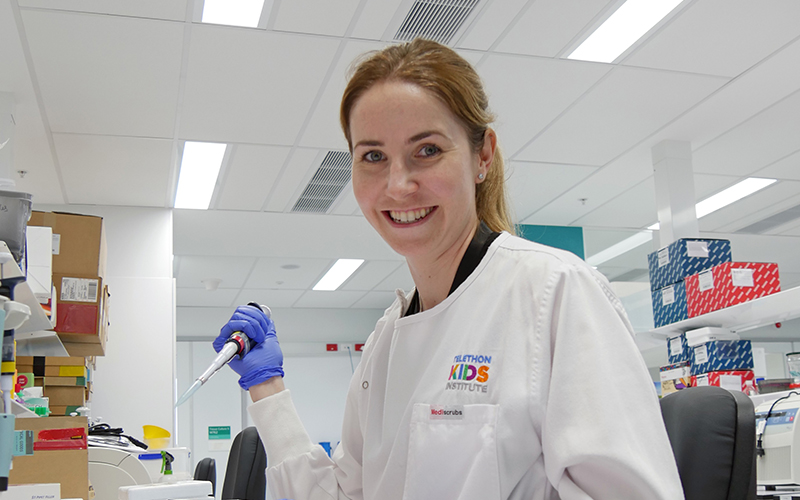
A The Kids Research Institute Australia researcher will work to better understand the immune system mechanisms that cause multiple sclerosis, thanks to a new grant from MS Australia.
This manuscript sheds light on the impact of maternal breast milk antibodies on infant health. Milk antibodies prepare and protect the newborn against environmental exposure, guide and regulate the offspring's immune system, and promote transgenerational adaptation of the immune system to its environment.
Neutrophils are the most abundant immune cell in circulation. However, due to a number of technical challenges for researchers, including the neutrophil's short lifespan and difficulties with preservation, they are often discarded during blood processing and thus ignored in cohort studies. As such, the contribution of neutrophils to disease and their involvement in disease mechanisms is less explored compared with other immune cell types.
Sickle cell disease (SCD) is an inherited red blood cell disease that results in a multitude of medical complications, including an increased risk of invasive disease caused by encapsulated bacteria, such as Streptococcus pneumoniae. Pneumococcal vaccines have contributed to a significant reduction in pneumococcal disease (PD) in children and adults, including those with SCD. This phase 3 study evaluated the safety and immunogenicity of V114, a 15-valent pneumococcal conjugate vaccine, in children with SCD.
Despite widespread use of pneumococcal conjugate vaccines (PCVs) in children, morbidity and mortality caused by pneumococcal disease (PD) remain high. In addition, many children do not complete their PCV course on schedule. V114 is a 15-valent PCV that contains two epidemiologically important serotypes, 22F and 33F, in addition to the 13 serotypes present in PCV13, the licensed 13-valent PCV.