
Search

Children across Australia aged 4-12 years are being asked to grab their crayons, pencils or pens and create their best drawing of themselves and their siblings in a simple study that will help researchers learn more about sibling relationships.
Australian authorities made COVID-19 vaccines available for children aged under 5 years old with serious comorbidities in August 2022. There is presently no universal programme for young children, but crucial to any rollout's success is whether parents are motivated and able to vaccinate. By examining parents' vaccine intentions, this study aims to inform current and future COVID-19 vaccine roll-outs for children aged under 5 years.
SAMStat is an efficient program to extract quality control metrics from fastq and SAM/BAM files. A distinguishing feature is that it displays sequence composition, base quality composition and mapping error profiles split by mapping quality. This allows users to rapidly identify reasons for poor mapping including the presence of untrimmed adapters or poor sequencing quality at individual read positions.
This single-centre retrospective study explores demographics and outcomes of patients who underwent a modified Blalock-Taussig shunt (MBTS) over a 22-year period. The predominant surgical approach in this study is a lateral thoracotomy, in contrast to a midline sternotomy. Risks and outcomes of this approach are compared with national and international literature.
Despite the wealth of knowledge about the impact of bullying victimization, information gaps exist about how traditional and cyber bullying in early adolescence is associated with emotional wellbeing, namely, indicators of positive wellbeing.
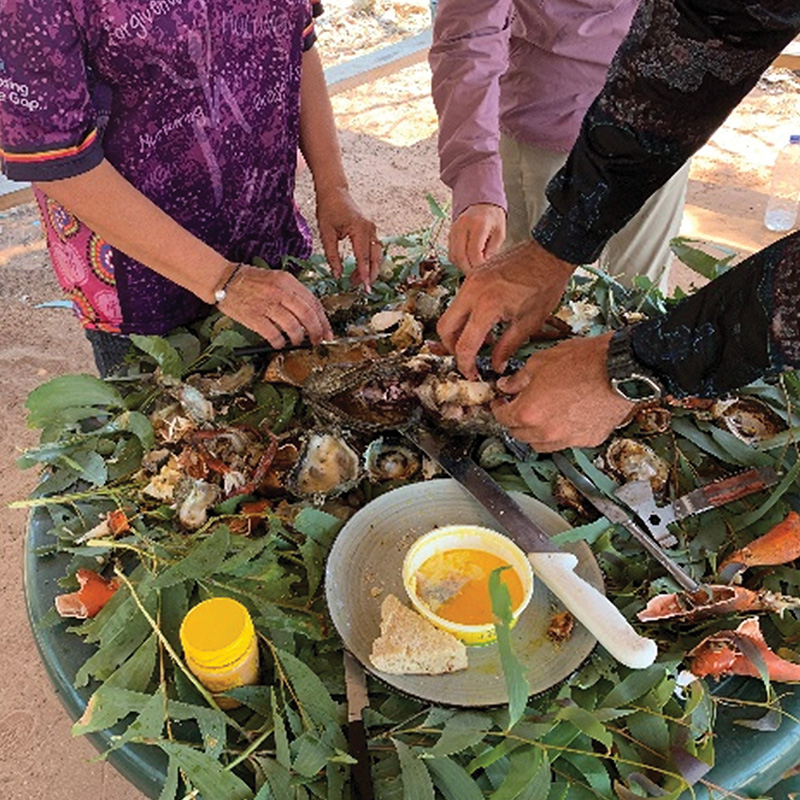
Researchers are collaborating with Community Elders to find out how bush tucker and traditional food can improve the health of Aboriginal children.

The Walkern Katatdjin (Rainbow Knowledge) project has produced a suite of resources to help services become more inclusive.

The Kids researchers are working with Perth Children’s Hospital and other experts across the country to get ahead of a sneaky virus few mums or even health professionals have heard of.
Substantial progress has been made in reducing the burden of malaria in Africa since 2000, but those gains could be jeopardised if the COVID-19 pandemic affects the availability of key malaria control interventions. The aim of this study was to evaluate plausible effects on malaria incidence and mortality under different levels of disruption to malaria control.
The design of a videolaryngoscope blade may affect its efficacy. We classified videolaryngoscope blades as standard and non-standard shapes to compare their efficacy performing tracheal intubation in children enrolled in the Paediatric Difficult Intubation Registry.