
Search
Myopia (near-sightedness) is an important public health issue. Spending more time outdoors can prevent myopia but the long-term association between this exposure and myopia has not been well characterised. We investigated the relationship between time spent outdoors in childhood, adolescence and young adulthood and risk of myopia in young adulthood. The Kidskin Young Adult Myopia Study (KYAMS) was a follow-up of the Kidskin Study, a sun exposure-intervention study of 1776 children aged 6-12 years.
Esophageal atresia (EA) affects around 2.3-2.6 per 10,000 births world-wide. Infants born with this condition require surgical correction soon after birth. Most survival studies of infants with EA are locally or regionally based. We aimed to describe survival across multiple world regions. We included infants diagnosed with EA between 1980 and 2015 from 24 birth defects surveillance programs that are members of the International Clearinghouse for Birth Defects Surveillance and Research.
Coronavirus disease 2019 (COVID-19) is an acute respiratory illness caused by severe acute respiratory syndrome coronavirus 2 (SARS-CoV-2). SARS-CoV-2 initially was identified from a cluster of patients admitted with ‘pneumonia of unknown etiology’ in late December 2019 to hospitals in Wuhan, Hubei Province, China.
The diagnostic experiences of autistic adults in New Zealand have not been investigated and little is known globally about autistic adults' satisfaction with the autism diagnostic process. This study describes the diagnostic experiences of 70 autistic adults living in New Zealand and explores how these experiences are related to satisfaction during three stages of the diagnostic process. The results show that autistic adults were reasonably satisfied with the early query and diagnostic assessment stages, but were dissatisfied with the post-diagnostic support stage, with significant unmet needs. Dissatisfaction during the post-diagnostic support stage was also related to satisfaction during previous stages and poor coordination of supports. Suggestions are made on how to improve the autism diagnostic pathway for autistic adults in New Zealand.
Hereditary cancer predisposition syndromes (HCPS) account for at least 10% of paediatric cancers.1 Li‐Fraumeni syndrome (LFS) is a dominant HCPS caused by mutations in the TP53 gene and is associated with an 80–90% lifetime risk of cancer, commencing in infancy.2 Children of affected individuals are at 50% risk of inheriting the family mutation.
Over the past decade there has been a marked growth in the use of linked population administrative data for child protection research. This is the first systematic review of studies to report on research design and statistical methods used where population-based administrative data is integrated with longitudinal data in child protection settings.
Recent studies in very premature infants (<32 weeks gestation) have shown that early commencement of parenteral nutrition immediately after birth improves physical growth. However, there are concerns that early use of very high dose of amino-acids (>3.5 g/kg/day immediately after birth) may cause metabolic acidosis, elevated blood urea, slower head growth and refeeding-hypophosphatemia syndrome. A recent multicentre randomized controlled trial found that commencement of parenteral nutrition within 24-h of admission increases the risk of infections and prolongs the duration of ventilation and ICU stay in full-term neonates, older infants and children. The study also found that delaying to day 8 of admission increased the risk of hypoglycaemia.

Making FASD History inspires the rest of the world to follow suit.
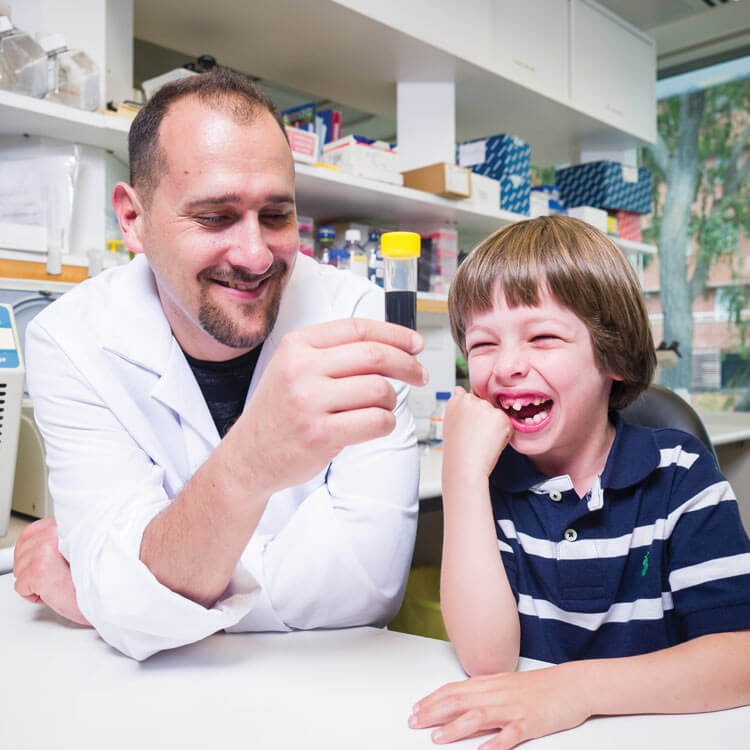
Thanks to an enabling donation from the Stan Perron Charitable Foundation, The Kids Research Institute Australia is home to one of the first paediatric personalised medicine research centres in the world.